Why does my low end sound wrong but I can't identify the exact problem?
Low-end problems are hard to identify because bass frequencies interact heavily with your room acoustics, require proper monitoring equipment to hear accurately, and involve multiple overlapping issues like phase cancellation, frequency masking, and resonance buildup. Consumer headphones and untreated rooms mask these problems, making precise diagnosis nearly impossible without trained ears or measurement tools.
Your struggle to identify low-end problems isn't about your ears—it's about your monitoring environment lying to you.
Here's what's actually happening: Consumer headphones and untreated rooms actively hide critical information below 250Hz. Those studio headphones you're using? They're rolling off everything below 50Hz. You're mixing blind in the sub-bass region. You cannot fix what you cannot hear.
Standing waves create peaks and nulls at specific frequencies. That bass note sounds loud because your room is amplifying it at your exact listening position—not because your mix actually has too much. Move three feet to the left and it disappears entirely. This isn't a mixing problem you can solve with better technique; it's a monitoring problem that requires acoustic treatment like bass traps or calibrated headphone correction software like Sonarworks Reference.
Most producers waste months tweaking EQ and compression when their actual problem is monitoring. Professional studios invest in bass traps and measurement microphones for a reason—making low-end decisions on inaccurate information guarantees bad results.
Here's the rarely discussed reality: low-end mixing is fundamentally different from mid and high-frequency mixing because you're not actually hearing the fundamental frequencies—you're hearing the harmonic distortion your brain interprets as low end. A 40Hz kick isn't audible on laptop speakers, yet you still "hear" it through the second and third harmonics at 80Hz and 120Hz. This means when you add saturation or distortion to bass, you're not just adding character—you're literally creating the audible information that allows people to perceive bass on systems that can't reproduce the fundamental. Most producers think they're fixing tonal issues when they're actually solving a psychoacoustic translation problem.
Low-end problems are never singular. You're simultaneously dealing with phase cancellation between kick and bass (making them sound weak), frequency masking in the 200-400Hz range (creating muddiness), and excessive sub-bass energy below 40Hz (causing the mix to feel unfocused). Each requires its own solution: phase alignment, surgical EQ cuts, harmonic saturation to make bass audible on small speakers.
Why can SNIP mentors immediately identify issues you can't hear? They've trained their ears across thousands of mixes and learned to compensate for monitoring limitations. They spot that your bass and kick aren't locked rhythmically, that your 200Hz buildup is masking the vocal clarity, that you have 10dB too much energy at 35Hz eating your headroom.
Three immediate steps: use a spectrum analyzer like SPAN or the one built into your DAW to see what you can't hear, reference your mix on multiple systems obsessively, and get feedback from experienced ears who can diagnose the specific problem rather than leaving you guessing. The alternative? Spending months making random adjustments that fix problems that don't exist while ignoring the ones that do.
Related questions
What tools can help me analyze low-end problems in my mix?
How do I know if my low-end issues are caused by my room or my mix?
Should I mix bass frequencies in headphones or on monitors?
What frequency ranges should I focus on when fixing muddy low end?
Sources
Sound on Sound - Studio SOS: Mixing and Monitoring Issues (soundonsound.com)
Ethan Winer, 'The Audio Expert' - Acoustics and Room Treatment chapters
Bob Katz, 'Mastering Audio: The Art and the Science' - Low Frequency Management section
Some of our mentors.
-
![]()
Dacota G
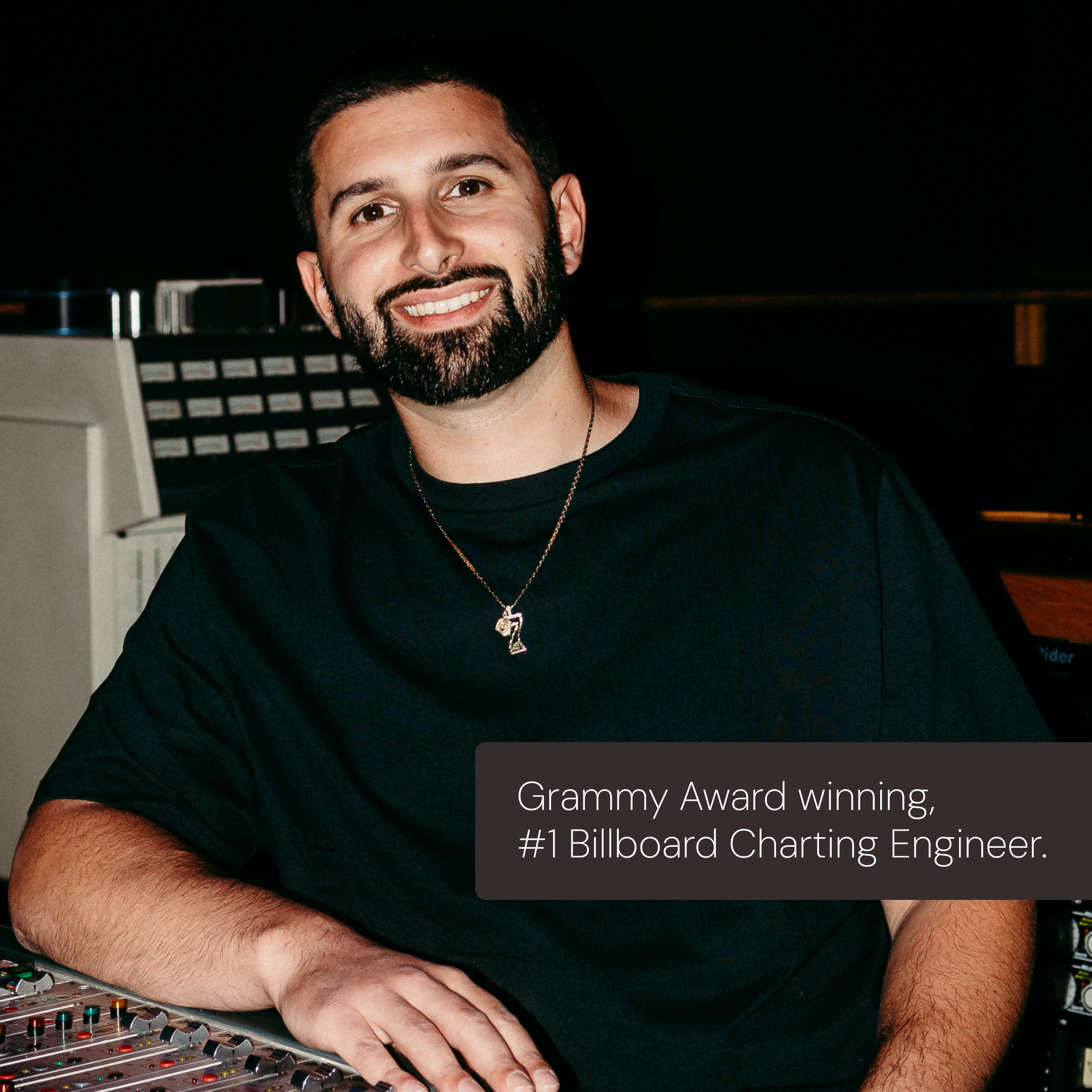
A Grammy-winning, multi-platinum engineer with credits including Childish Gambino, Usher, Diplo, and more. With a decade of experience and a finely tuned ear, he helps artists elevate their music to its highest potential.
-
![]()
DJ Kobayashi
A&R and cofounder at Batov Records (home for Sababa 5, Şatellites, Ouzo Bazooka, Shotnez, and more).
Running a biweekly show on Soho
Radio (London, UK). Producer and cofounder at Gypsy Hill. -
![]()
Magit Cacoon
A globally respected DJ, producer, and founder of Mago Music, known for her trailblazing presence in the underground electronic dance scene.
-
![]()
Menebeats
Grammy Award Winning Engineer
and Producer with credits including Childish Gambino, Young Thug, Travis Scott and more -
![]()
Omri Cohen
The owner of Be Yourself Sound, an MTV Europe Music Award winner and a true music obsessive. He has produced music for leading labels including Armada, Spinnin, Anjunabeats, Protocol, Realm, Stress Records, and more.
-
![Ori Shochat — SNIP mentor, DJ, and music producer shaping Israel’s hip-hop scene through collaborations with top artists]()
Ori Shochat
Music producer and DJ, known for shaping the country’s hip-hop sound through collaborations with top artists.
-
![]()
Sagi Braitner
Producer, composer, and mixer behind artists like Eliad and Avraham Tal, known for sleek electronic sound and sharp detail.
-
![“Adi Ulmansky — SNIP producer and mentor fusing electronic, hip-hop, trap, and chillwave influences in innovative music production.]()
Adi Ulmansky
Producer, singer-songwriter and rapper blending electronic, hip hop, trap and chillwave influences in her music.
-
![Nadav Ravid — SNIP music mentor, producer, DJ, and former GLGLZ manager known for shaping Israel’s mainstream sound and cultural impact]()
Nadav Ravid
Music producer, DJ, and former manager of GLGLZ, Israel’s top radio station known for its impact on mainstream music and culture.
-
![A man with short hair and a tattoo on his neck, wearing a black shirt, sitting outdoors among branches and pink flowers, looking at the camera.]()
Yotam Avni
DJ & electronic music producer known for blending techno, deep house and experimental sounds, releasing on labels like Innervisions, Hotflush, and Stroboscopic Artefacts.
-
![Ido Maimon — SNIP composer, producer, and multi-instrumentalist blending pop, jazz, rap, and lo-fi influences.]()
Ido Maimon
Composer, music producer, and multi-instrumentalist known for blending pop, jazz, rap, and lo-fi in his work.
-
![Shpilman — SNIP DJ and mentor deeply rooted in club culture, creating immersive dance floor experiences through rhythm and atmosphere]()
Shpilman
DJ and music enthusiast deeply rooted in club culture, blending passion, rhythm, and atmosphere to create immersive experiences on and off the dance floor.
-
![Dan Orbach — SNIP DJ, producer, and synth tutor known for house and techno releases as DJ Gear and Tingz, co-founder of Phlex Recs and Powerpuff Trax]()
Dan Orbach
DJ, producer, and synth tutor. Known for house and techno releases as DJ Gear and Tingz, and co-founder of Phlex Recs and Powerpuff Trax.
-
![]()
FLORA
Singer-songwriter and producer Flora has toured globally, released four albums, and opened for Asaf Avidan. She leads Women in Sound and hosts Shavot Ha’azana.
-
![]()
Ella Gotman
Israel’s first female DJ, Ella Gutman has played top clubs worldwide, earned two Best DJ awards, and released eight influential albums on cutting-edge labels.
-
![]()
Autarkic
Tel Aviv producer blending House, Leftfield, and Rock & Roll. Released on Garzen, Turbo, and Life and Death, his music merges analog sound and field recordings into narrative-driven electronic works.
-
![]()
Ziv Barashi
Tel Aviv musician and sound artist ZIV blends music, film, and art. Featured in Vogue and XLR8R, she’s performed globally and created a sound installation for the Venice Biennale.









How It Works

Upload Your Work.
Share your creative piece. whether it’s a track, idea or full draft.

Ask for Feedback.
Get targeted insights from peers or pros, tailored to your style and goals.

Iterate & Release.
Refine, improve, and get release-ready with confidence.
Why Snip?
Precision
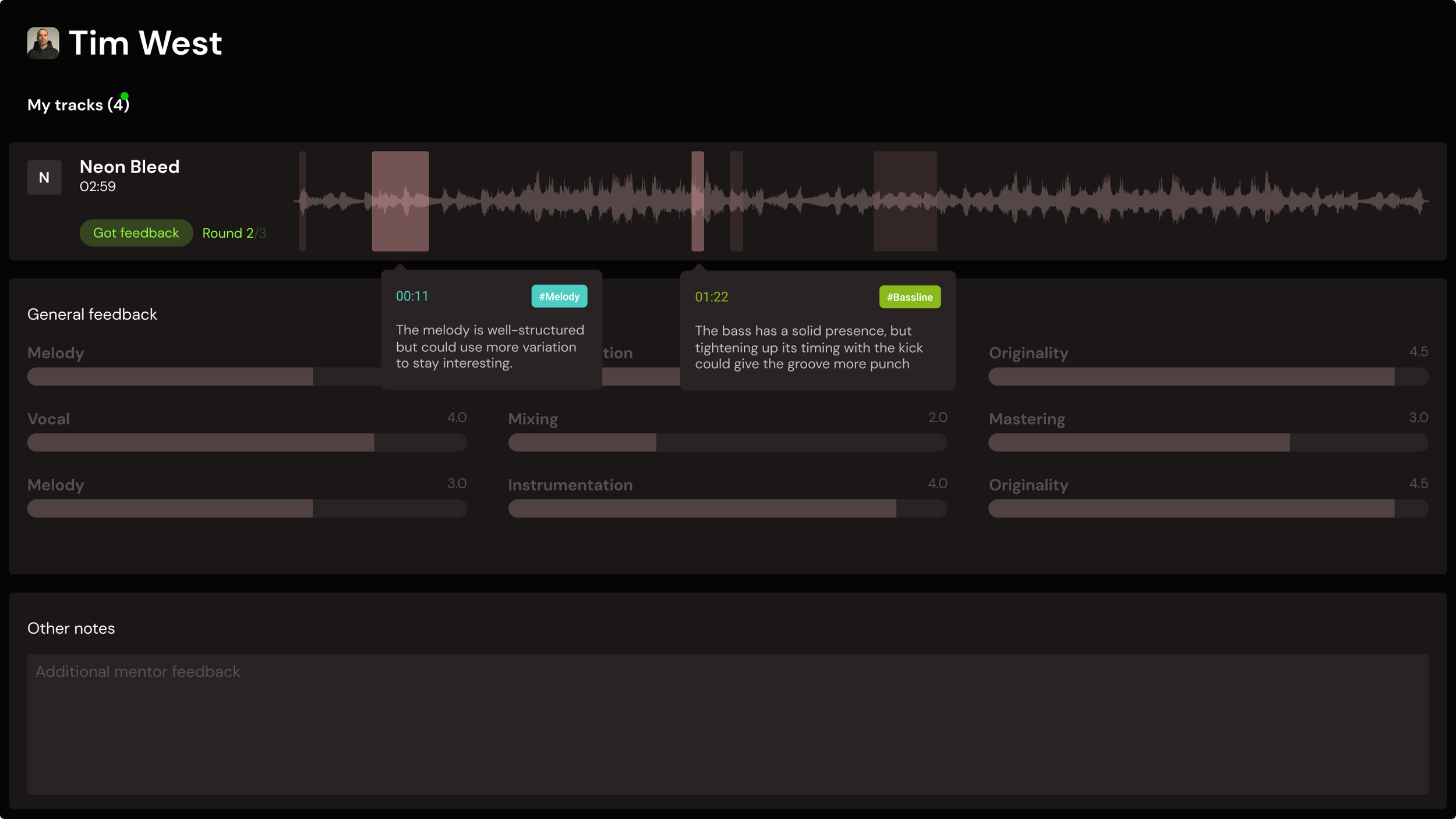
Structured, timestamped comments so you know exactly what to fix and where.
Confidence
Go from second-guessing to release-ready with creative momentum on your side.
You’re close, but something’s not clicking. You don’t need guesses. You need real feedback.
Momentum
Fresh ears. Pro insights. AI-powered suggestions that cut through the noise.
Clarity

What Musicians Are Saying